A sound art project in cooperation with the National Mill Day 2023 of Portugal, Sound Art Center Sonoscopia Porto and the Lusófona University Sound Technologies Department, Lisbon
Circulating Sounds is an artistic project that focuses on the sounding windmills of Portugal and their unique acoustic manifestations. The plan is to carry out a Windmills Sound map in cooperation with the Lusofona University Lisbon, an audio walk with QR codes from different windmill sites in a public park, a Sound Installation and a LIVE Stream Performance with a windmills ensemble in rural settings as well as an artist residency in Portugal.
The aim of the project is to show the free access to the mills and sonic experiences in their dynamics and change. This can happen online via the sound map as well as in the landscapes of reality when visiting a mill.
The creative process invites participation and brings together windmillers, students, scientists, sound artists and the global population.
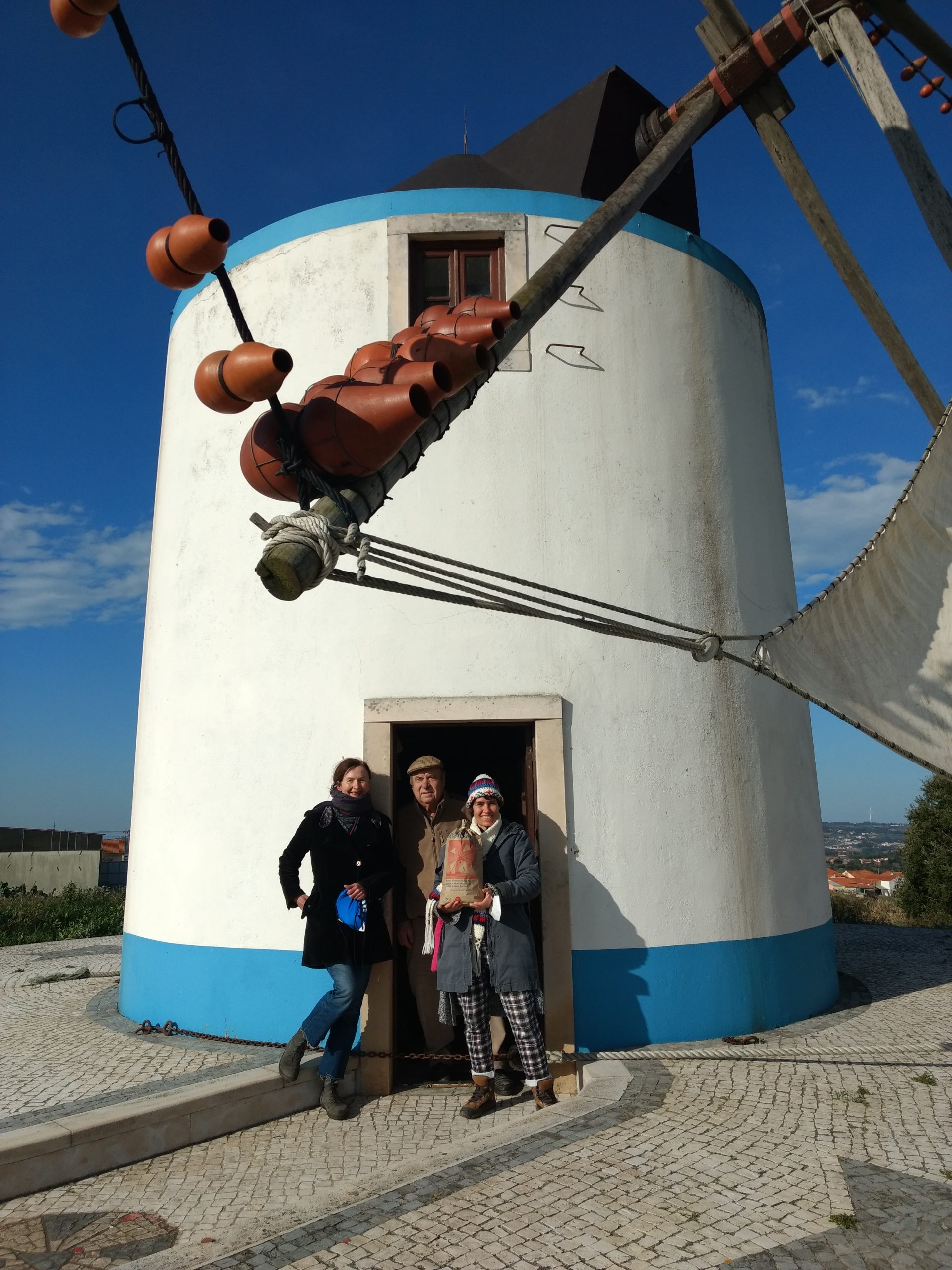
Turquel
The natural use of wind energy has existed in Portugal since the 15th century. The historical windmills are part of the European cultural identity. Regrettably, they are threatened with disappearance: youth problems among windmillers could mean that, unless their sounds are protected and preserved, windmills restored with EU funding will soon be an expiring culture.
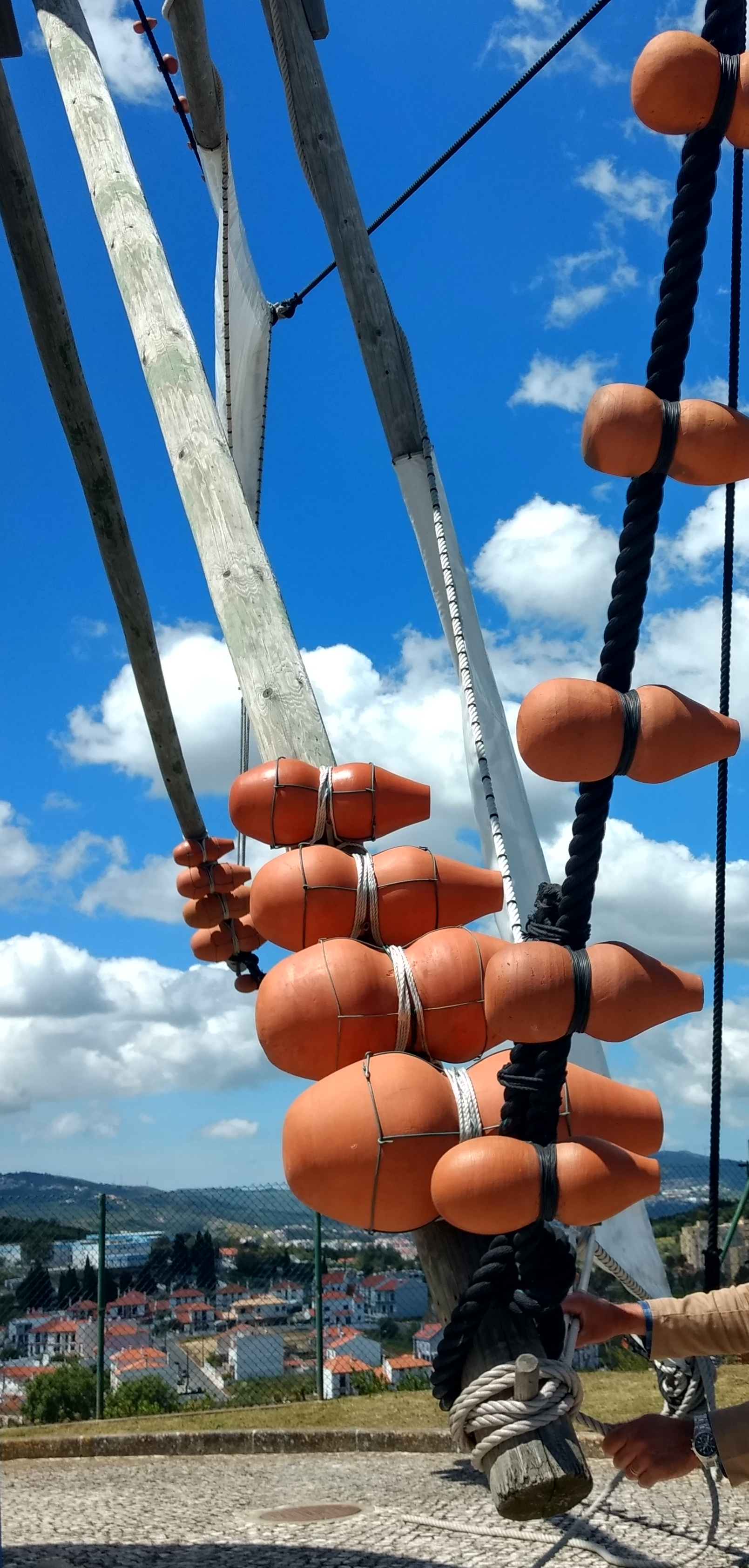
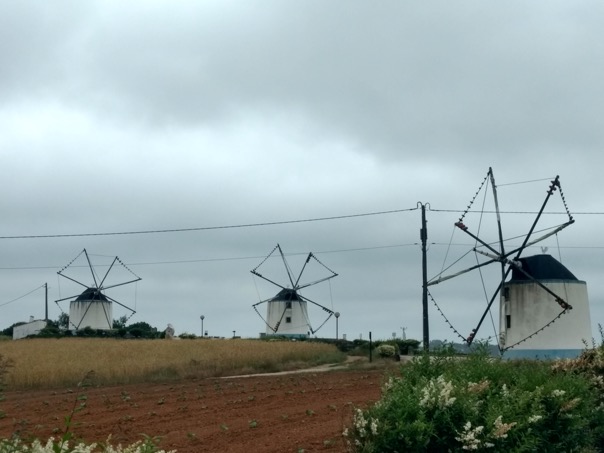
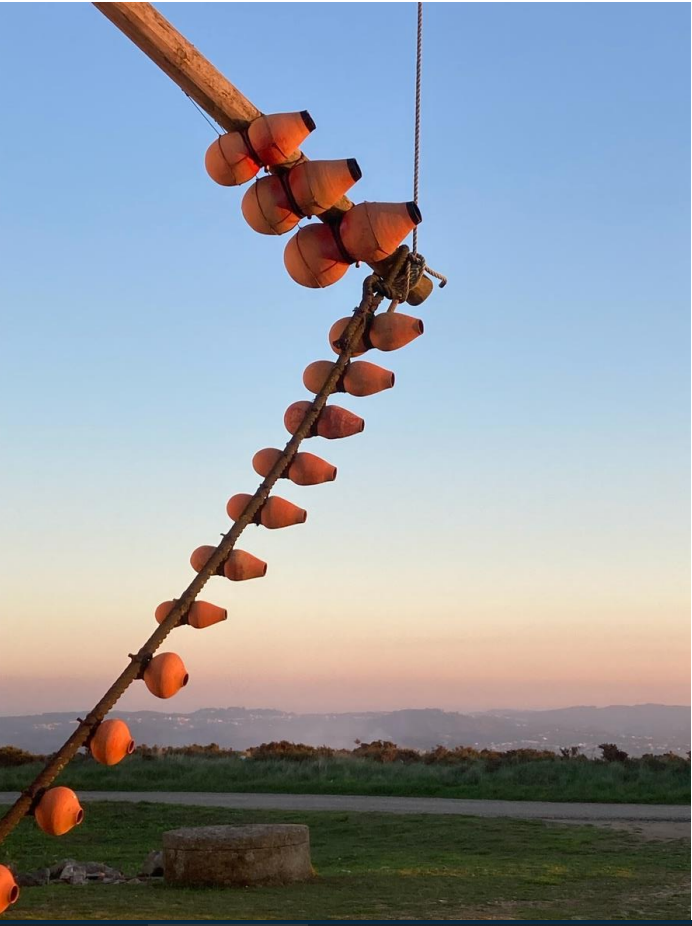
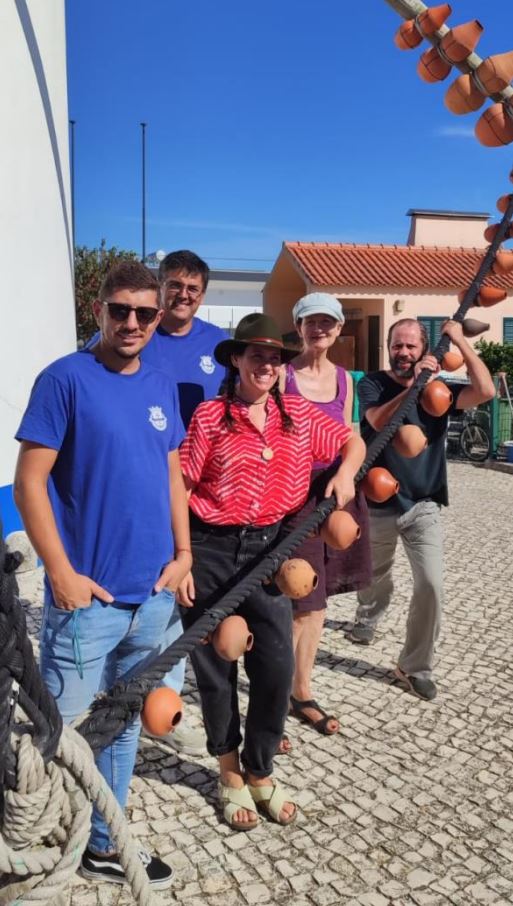
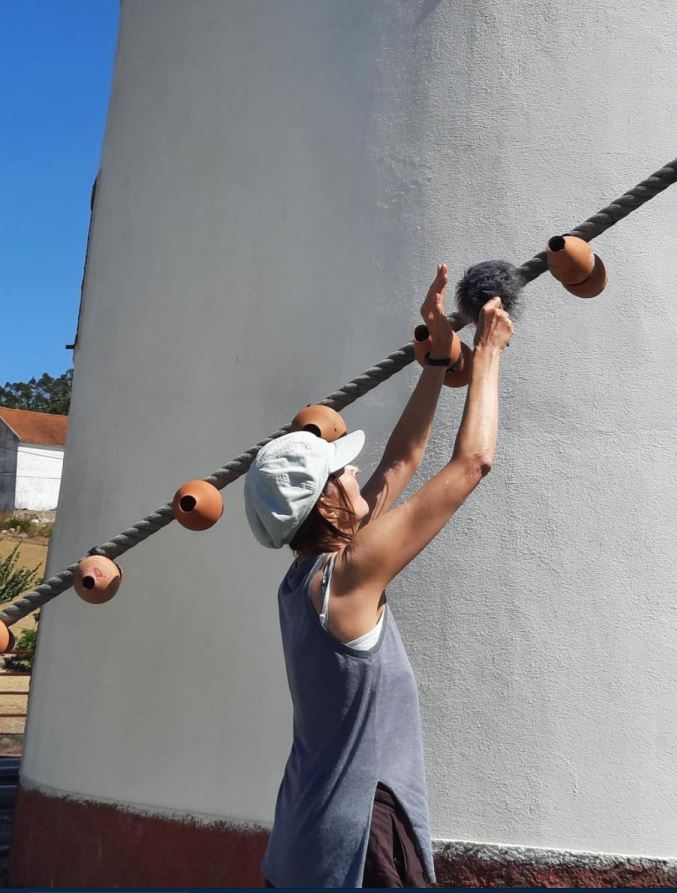
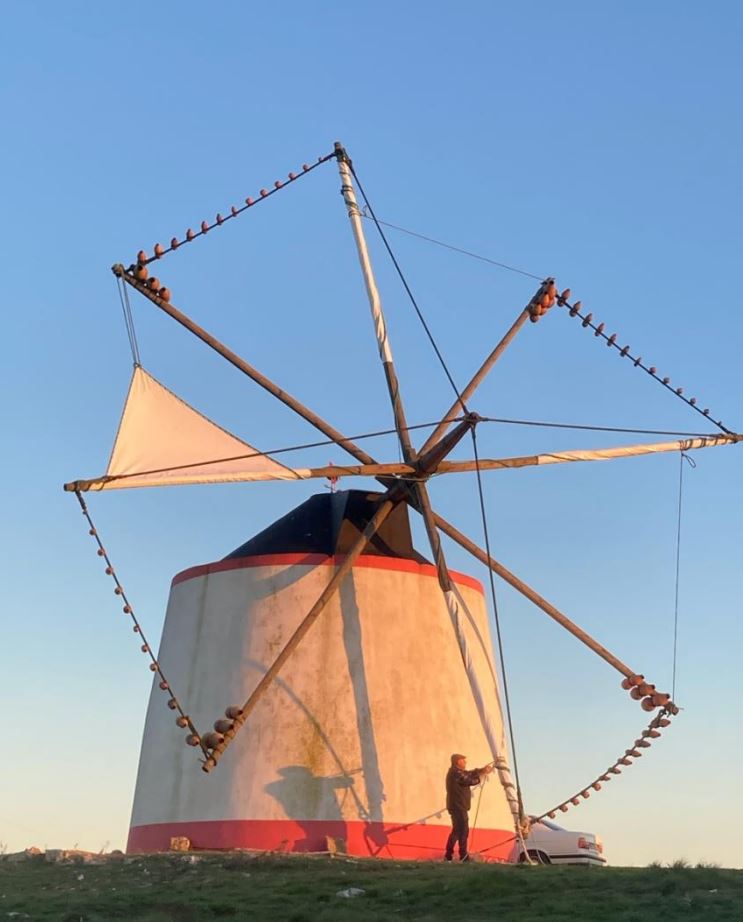
Due to their special construction, the blades of these windmills produce a moving sound. The wind makes the blades rotate. So-called Buzios and Jarras are attached to the blades to compensate for the centrifugal forces of rotation with their weight. Mounted horizontally on poles and positioned with the opening facing the wind, they are blown over by the wind, producing a significant sound.
The windmill is therefore a measuring device, but also an acoustic early warning system.
Apelação/Lisbon – Buzios
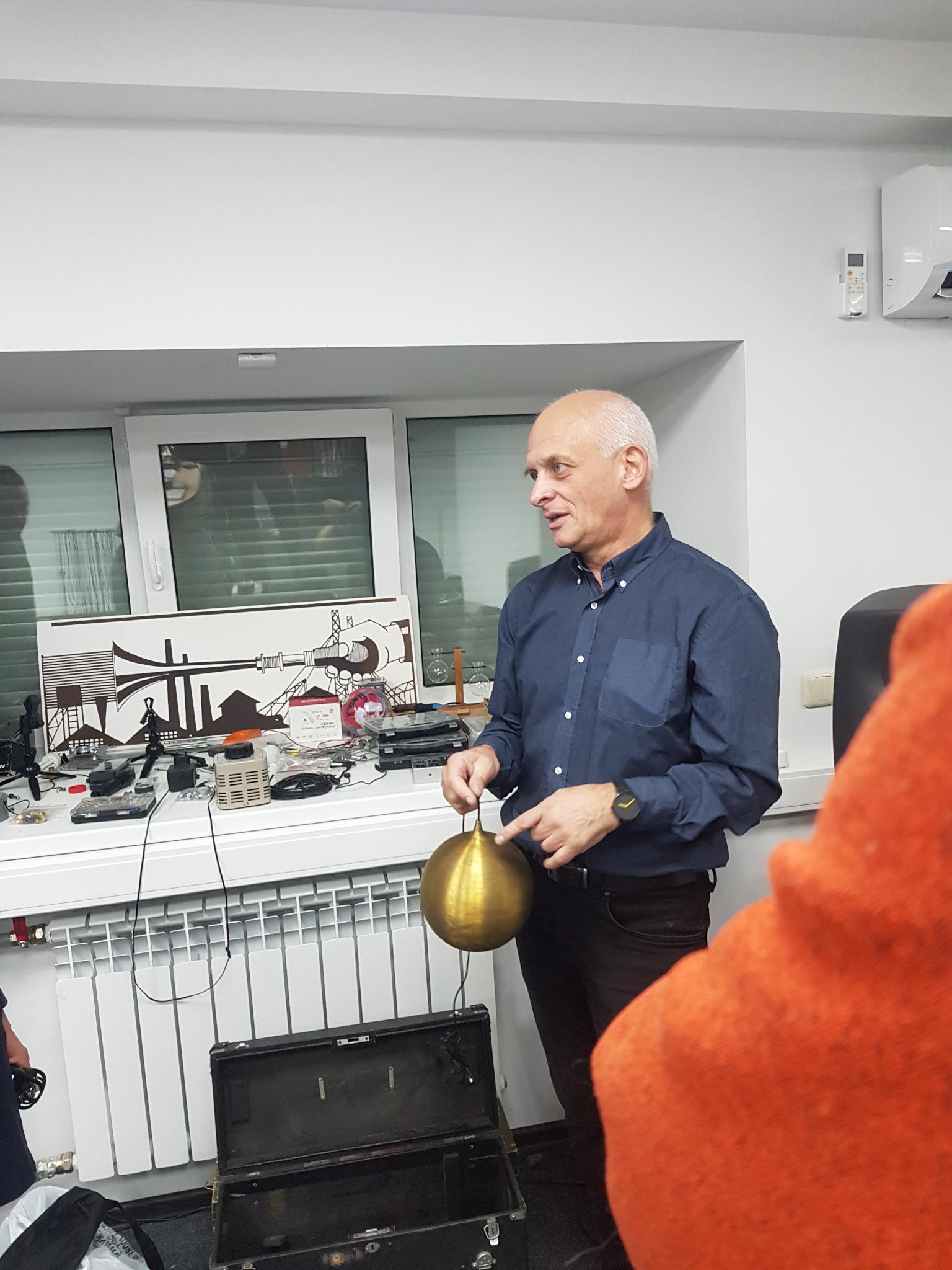
Andrej Smirnov, head of the Theremin Center for Electroacoustic Music, with a Helmholtz resonator, Moscow 2021
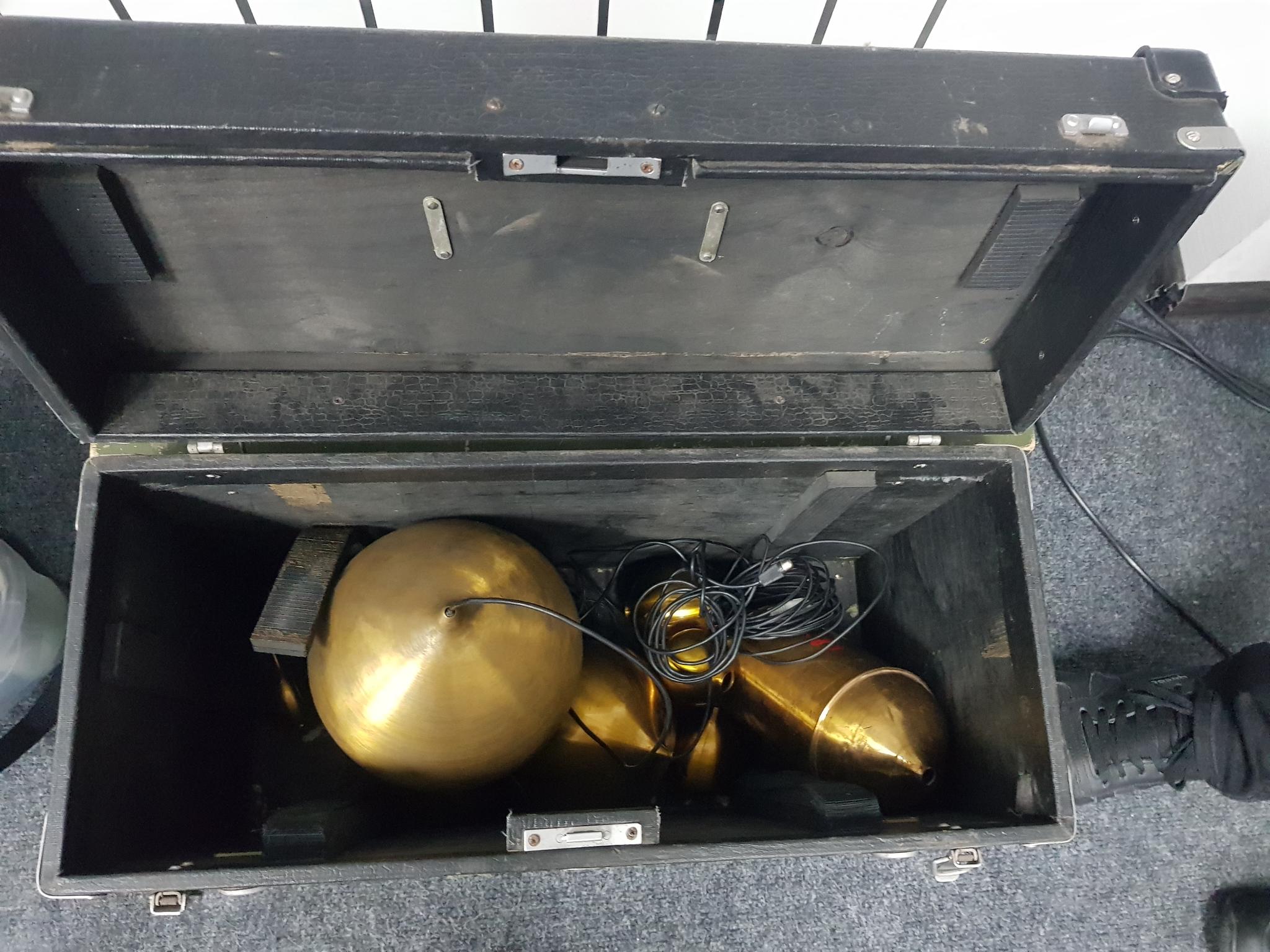
Helmholtz Resonators
and Buzios
As a form of resonator, the Buzios can be compared to the "Helmholtz resonators". Hermann von Helmholtz, the founder of acoustics, developed acoustic resonators in 1859 in order to detect with his ear at the upper pointed opening a single fundamental tone from a sound mixture entering the lower opening. The resonator was initially blown from glass and later formed from sheet brass. This can be read in his "Doctrine of Sound Sensations" published in 1862.
A resonator is an oscillating system whose components are tuned to one or more specific natural frequencies in such a way that the resonator only oscillates at these frequencies in the case of broadband excitation.
In contrast to the Helmholtz resonator, the Buzios do not have an airtight connection to the ear and are often in motion.
Windmills ensemble in Portugal, Vale de Pinhoa
Musically, apart from the spatial sound experience, three moments stand out here: it is striking that outside of the mill both the sounds produced by the wind and the regularly recurring sound of the rotating windmill blades have a noisy character. In contrast, the different frequencies of the approximately fifty resonating bodies are very clearly perceptible and have a harmonical character. Finally, the sounds inside of the mill have a rhythmical sound character. There are three types of sound vessels such as "buzios "(buzzers), "canudas" (double flutes) and "jarras" (vases) made of clay jars, conch shells, reeds, cane, or tin cans. Using the different sounds of the resonators, the millers can measure the wind direction and strength inside the mill and then adjust the sails of the windmills accordingly to achieve maximum energy yield.
Categories of collected sounds:
Environmental sounds
(urban or rural context)
rythmical phase
inside the windmill
harmonic phase
outside the mill
Database of sounding windmills of Portugal and Sound map
The windmills sound map is the result of an artistc research about fieldrecordings of portuguese sounding windmills. It should be used both by devices like the phone and the computer.
The sound map is like an archive a data base for the public. Furthermore, it will provide a valuable foundation for further artistic and scientific research, production of cultural content (e.g. for strengthening rural areas).
The Windmills Sound Map is conceived as an interactive platform that has future potential as a permanently expandable basis. Technically, a sound map is a digital interface that embeds a variety of audio recordings into a kind of audible geographical structure. This is how the sound map works: as soon as the user clicks on a symbol on the interactive map of Portugal, she or he immediately will hear the corresponding location-specific sound of a windmill.
Audio Walk based on QR technology
The first public presentation of the sound map will happen in a public park. Visitors can listen to the sounds of windmills from Caixeiros, Bordhineira, Sobral, Madeira, Turquel, Apelação/Lisbon, Catefica or Vale de Pinhoa in an audio walk based on QR code technology.
Technically, an Audio Walk is an interactive tour, structured by different sound sources. The audience is invited to follow a series of QR Codes on signs attached on trees, that are connected with windmills sounds. Each Code is representing a specific windmills soundsphere.
LIVE Performance based on Windmills sounds
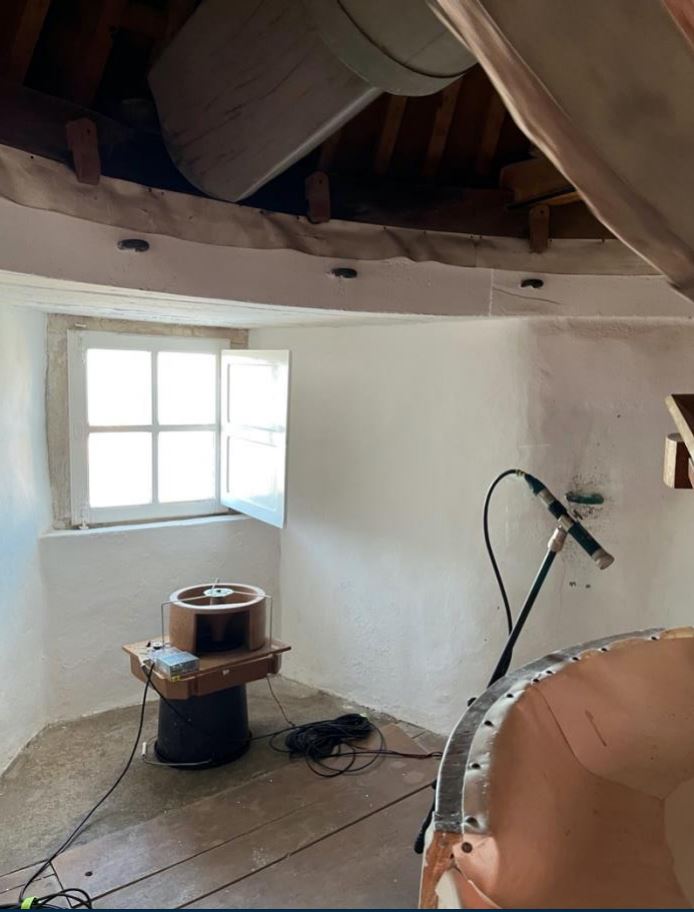
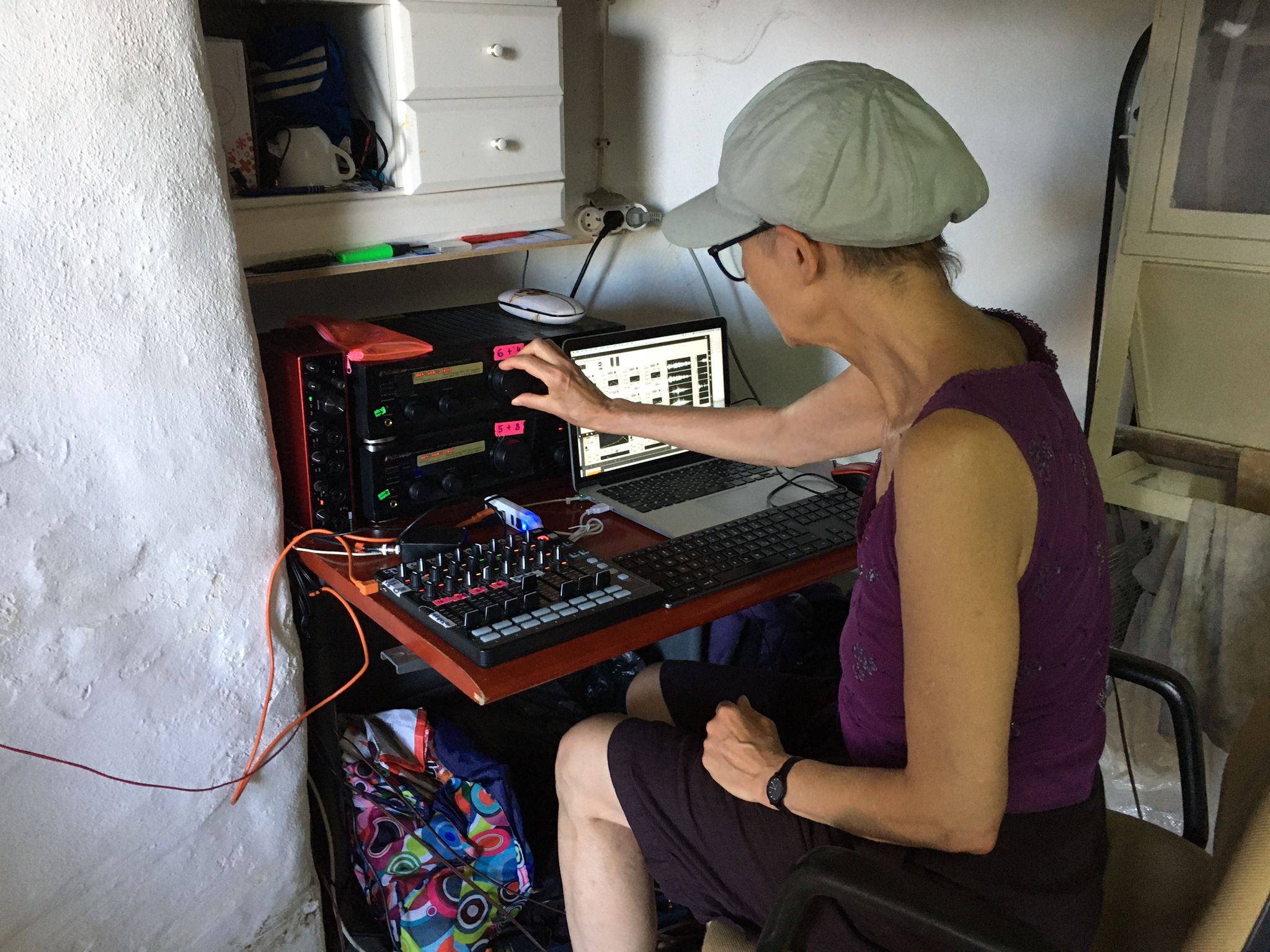
As a part of the program of the National Portuguese Windmills Day in the year 2023 a Duo LIVE Performance with my partner Dorian Lange in the Caixeiros windmill at Silveira was realised. We recorded the sounds of the windmill with microphones and processed them live on site in an improvisation with our special equipment, mobile and rotating speakers (Leslie speakers built from old Hammond organs and controlled by computer). Analogous to the rotational movements of the mills, the loudspeakers, which are located on the floor, wall or ceiling of the room, also rotate at different speeds. In this way, they vary and transform their sound material. By hoisting the sails and steering the windmill, the miller would be an active part of the concert. The audience follows the concert through the open door of the mill and outside in the surrounding square or cafe via loudspeakers.
Collecting Windmills sounds
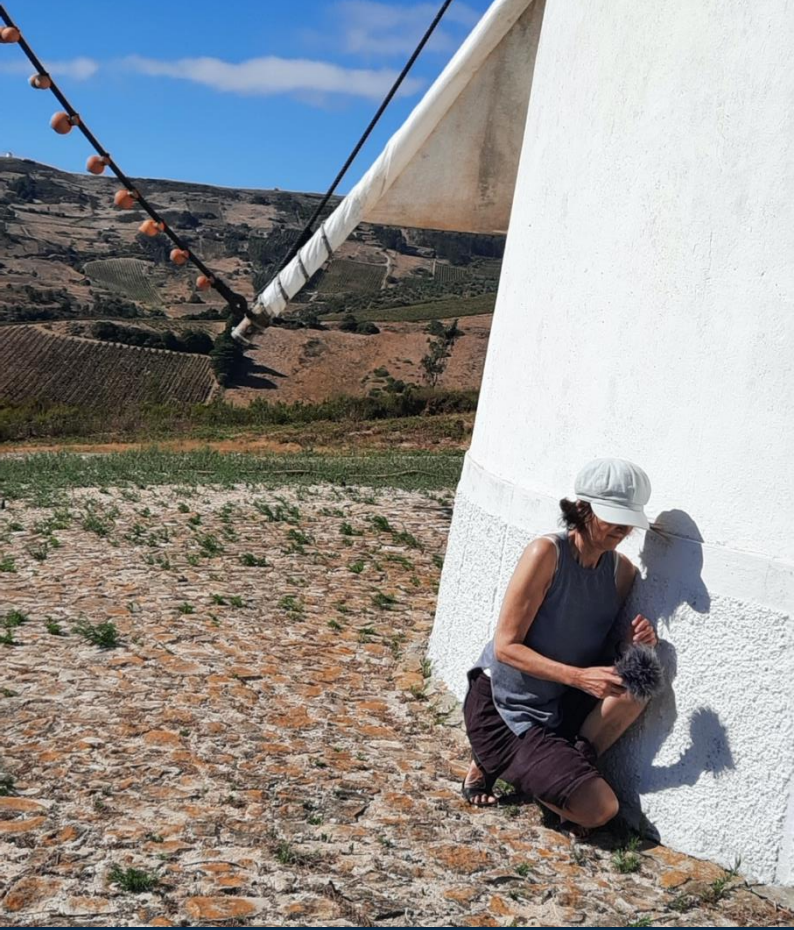
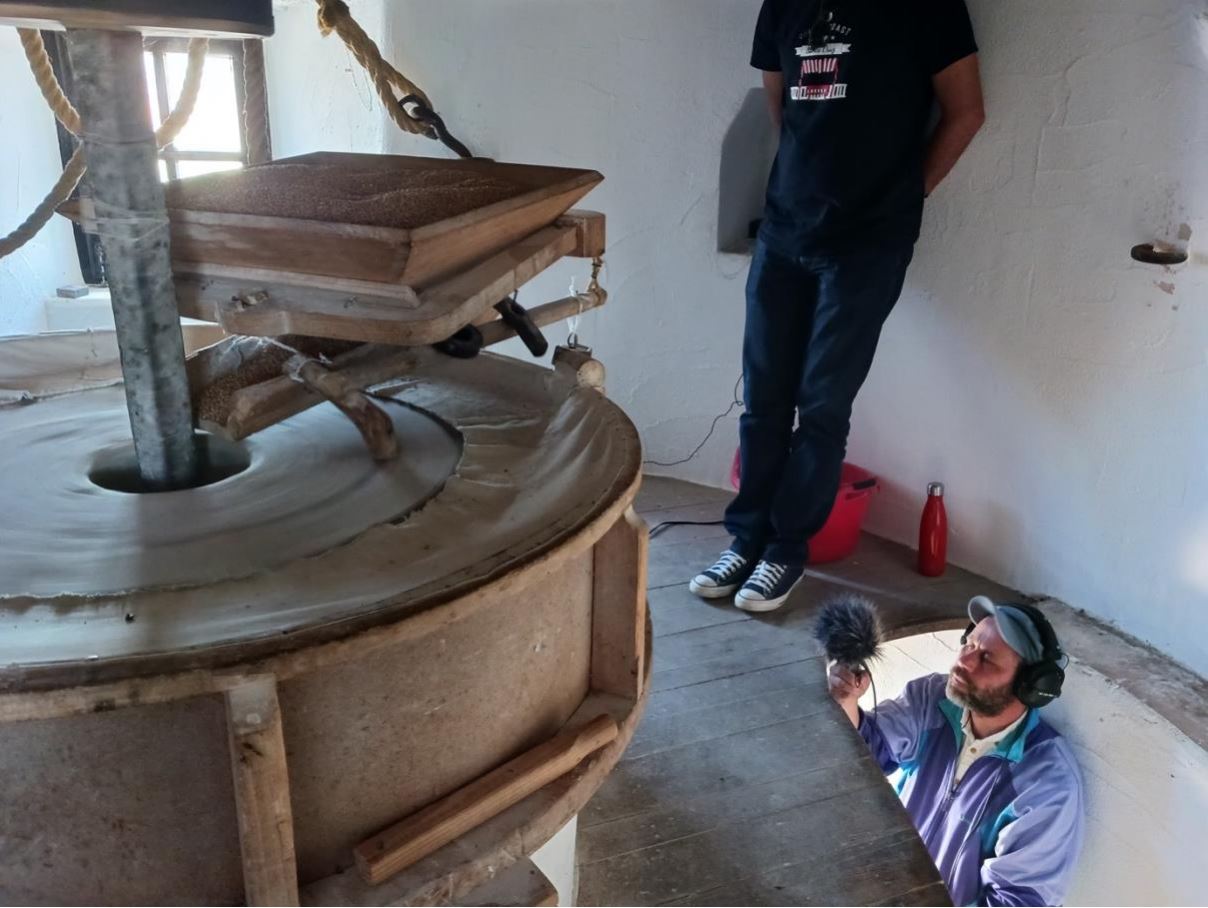
In November 2021 I started to collect a series of sound recordings of different windmills for the Sound Map : of the Caixeiros windmill, Bordhineira, Sobral, Madeira, Turquel, Apelação in Lisbon, Catefica and the Vale de Pinhoa.
Caixeiros
Catefica
Vale de Pinhoa
Turquel
Montejunto, de Ovos
Apelação/Lisbon
The weather conditions, wind strength, temperature, time of day,historical and geographical context all influence the sound result.
The environmental noises , such as the flapping and beating of the sails in the wind, dogs barking, birds chipping, distant traffic noise or human voices are all included components in addition to the moving polyphonic sounds of the buzios.
Sonic material
- pure fluttering of sails in the wind - pure sound of buzios in the wind during the standstill of the wings - rhythmical phase inside the windmill - harmonic phase inside the windmill - environmental sounds (traffic, animal, humans, acoustic effects of other buildings
Windmillers activities
- rotating and swinging the mill according to wind direction - hoisting the sails - starting and stopping the wings - unfolding the sails size proportional to the wind intensity - furling the sails
Modi
rhythmical phase - with movement
silent - with movement
silent - without movement
harmonic phase - without movement
harmonic phase – with movement
harmonic phase - windstill
Spatializing Windmills sounds
The project Circulating Sounds focuses on the sonic aspects of the Portuguese windmills in order to research and document changing, rotating sounds in the landscape and urban context.
It will fosten to contact owners of windmills interested in a dialogue of art and culture on the topic of soundscapes with the aim of raising awareness for sound phenomena in the nature and society as well as sound art as a multidimensional spacial and temporal art form.
Checklist:
Before you start your windmill expedition, please note the following :
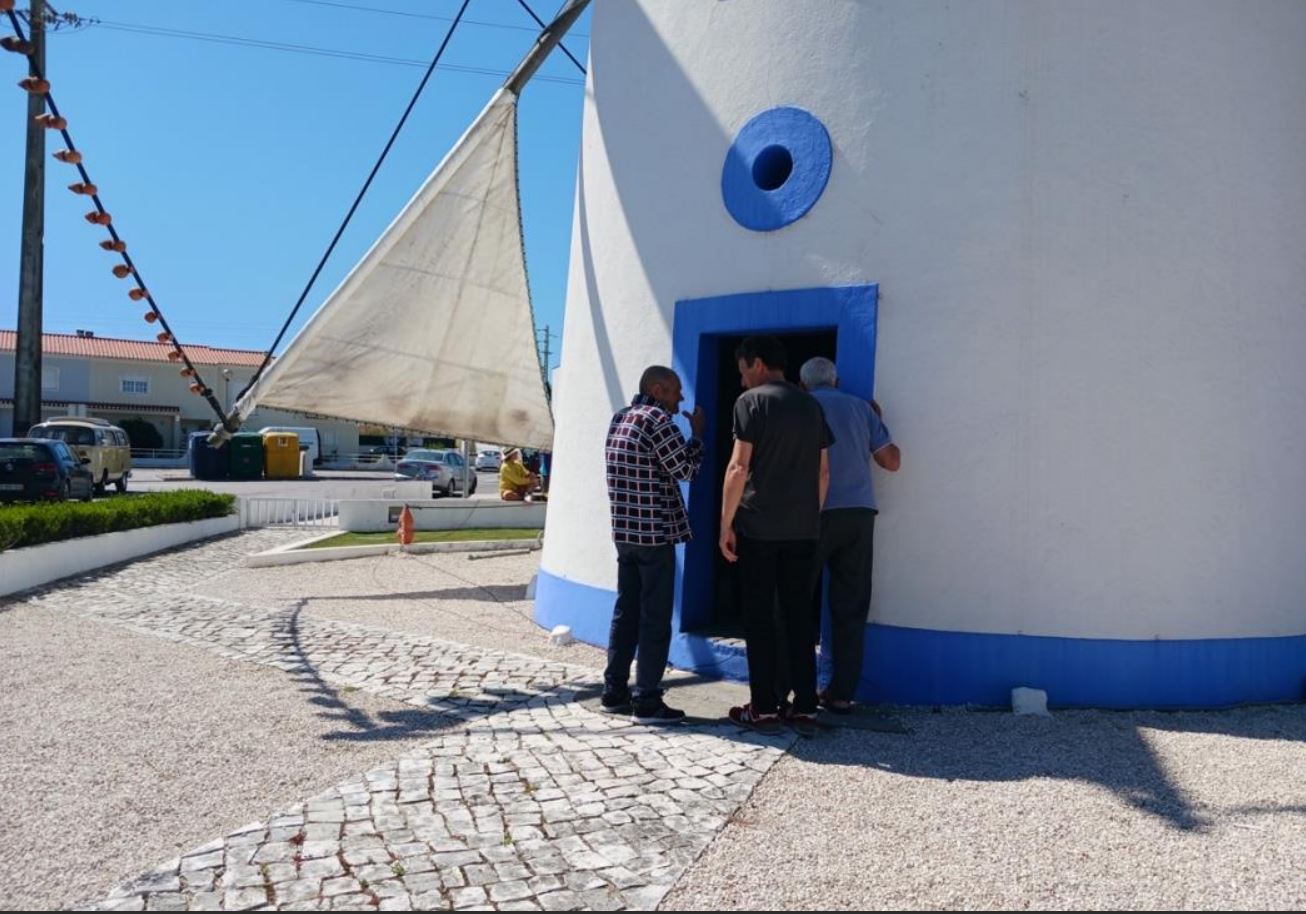
contact the windmiller to make an appointment
weather report – daily changing intensity of wind
Calculate enough time: possibly you have to wait for the wind. The wind determines, when and how the recording starts.
Calculate enough time: Preparations of the mill by the windmiller: The intensity of the wind dictates the amount of used sail cloth.
Choose the type of microphone
Wait for the wind
Apelação harmonical
Apelação rhythmical
Catefica rhythmical
Catefica harmonical
Listen to the Windmills
Circulating Sounds is a musical sustainability project that focuses on the sounding windmills of Portugal and their unique acoustic appearance. The project includes concerts, sound installations, an audio walk, a workshop and an artist talk.
Sound Installation
Jutta Ravenna prepared the kinetic sound installation "Dream Turn" with Leslie loudspeakers and field recordings of Portuguese windmills as sustainable technology during her artist residency at the cultural institution Sonoscopia in Porto and in Lisbon.
The work was presented at the Lisboa Soa Festival.
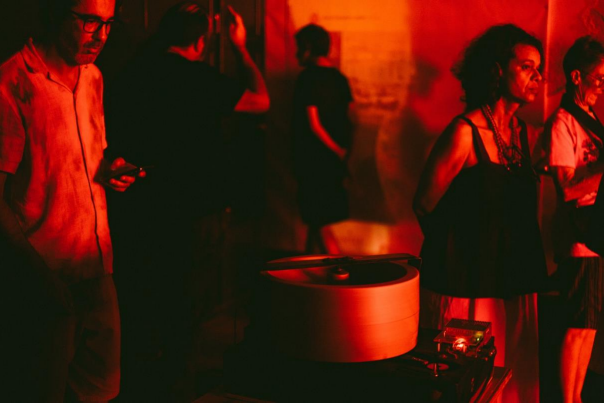
Jutta Ravenna - Dream Turn with Leslie loudspeakers, Lisboa Soa - 2023.
Photo credit: Vera Marmelo
Ravenna transfers the sound of the windmills from the computer to the Leslie loudspeakers as if to an instrument in order to physically transform their sound. The room was previously prepared with several rotating loudspeakers, analogous to the rotating windmill wheel, which are placed on the floor, on tables, on the walls and on the ceiling. The listener himself is the actor of the sound variation. Walking through the room, sitting, lying down, standing in a straight or bent position, but also all kinds of head and body movements promote a variety of sound nuances.
In addition to the microtonal frequencies of the various computer-generated sine, square, sawtooth and triangular oscillations, the sound of rotating Portuguese windmill blades can also be heard in Jutta Ravenna's sound installation "Dream Turn". The natural use of wind energy has existed in Portugal since the 15th century. Due to their special design, the blades of these windmills produce a moving sound. The wind causes the blades to rotate. The so-called buzios and jarras are attached to the blades, whose weight is intended to compensate for the centrifugal forces of the rotation. Mounted horizontally on
The festival venue as an interface
The artists of the Lisboa Soa Festival were housed in the Quartel de Largo do Cabeco, a disused military facility in the center of the city, which facilitated the exchange with curators and fellow artists. This resulted in a new artist residency for Jutta Ravenna at the cultural institution OSSO (Caldas da Rainha) in 2024.
Fieldrecordings
Following the festival, Jutta Ravenna and Helga Kroeplin visited several windmills in the region to create further fieldrecordings of different windmill locations. The aim of the project is to show the free access to the mills and sonic experiences in their dynamics and change. This can happen online via the sound map as well as in the landscapes of reality when visiting a mill.
The creative process invites participation and brings together windmillers, students, scientists, sound artists and the global population.
The fascinating sounding windmills can be seen as kinetic sound sculptures due to their movable resonating bodies. Positioned at right angles to the wind, they are blown over by the wind, creating a significant noise. Based on the different sounds of the resonators, the millers inside the mill can measure the wind direction and strength and then adjust the sails of the windmills accordingly to achieve maximum energy yield. The numerous resonators sound different in each mill and are tuned imprecisely, which leads to interesting micro-intervals. Together with the wind noise, they influence the timbre.
Embedded in the landscape, you can hear not only the ambient sound created by the movement of the blades in the wind, but also the fluctuations in the rotational speed of the windmill blades resulting from the variations in wind force: with a harmonious sound character outside and a rhythmic sound character inside.
The sounds of the environment are just as important as the sounds of the object itself. The spatialization of sound was brought into relation on site not only in the sense of the circling, ringing mill wheel, but also in the diagonal sound movements of the aircraft taking off and landing over the Apelação windmill from the nearby Lisbon airport.
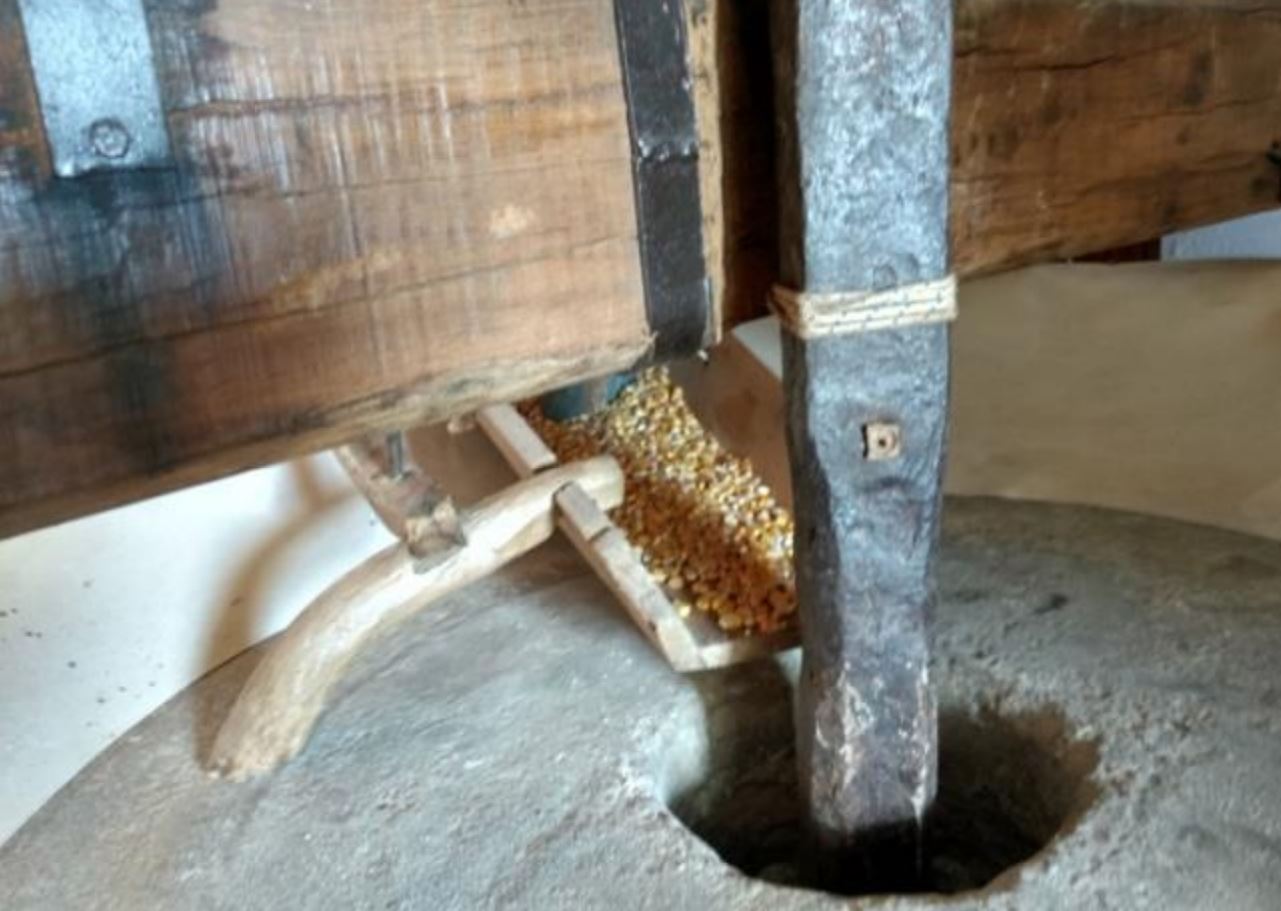
The sound is frequency-modulated in the acceleration and deceleration of the rotating mill wheel on the outside and the rotating Leslie loudspeakers on the inside. Francisco Jacinto, the windmiller, controlled the tempo fluctuations by varying the amount of grain that influenced the speed of rotation of the millstone and thus became the agent of the music.
Concert in the Apelação windmill next to Lisbon airport with local artists Eunice Arthur, windmiller Francisco Jacinto and Nuno Torres and J.Ravenna
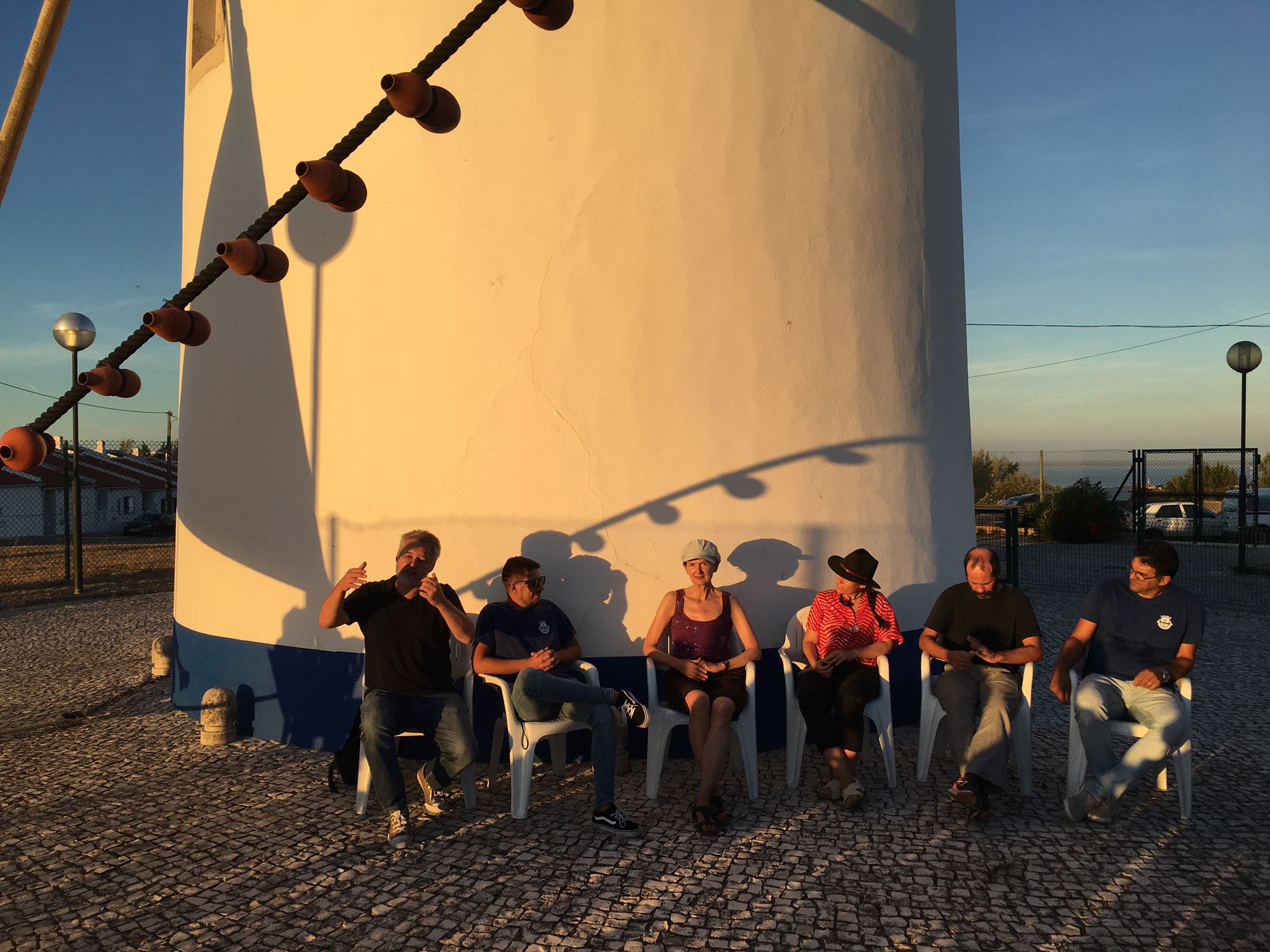
Artist Talk after the concert.
The audience was invited to change their listening perspective in order to perceive the different sound spheres in the interior (rhythmic and harmonic) and exterior (environmental sounds and windmill sounds).
Connected to natural forces such as wind energy, the Buzios and Jarras resonating bodies generate moving clusters across a broad frequency spectrum without any electricity, embedded in the landscape.
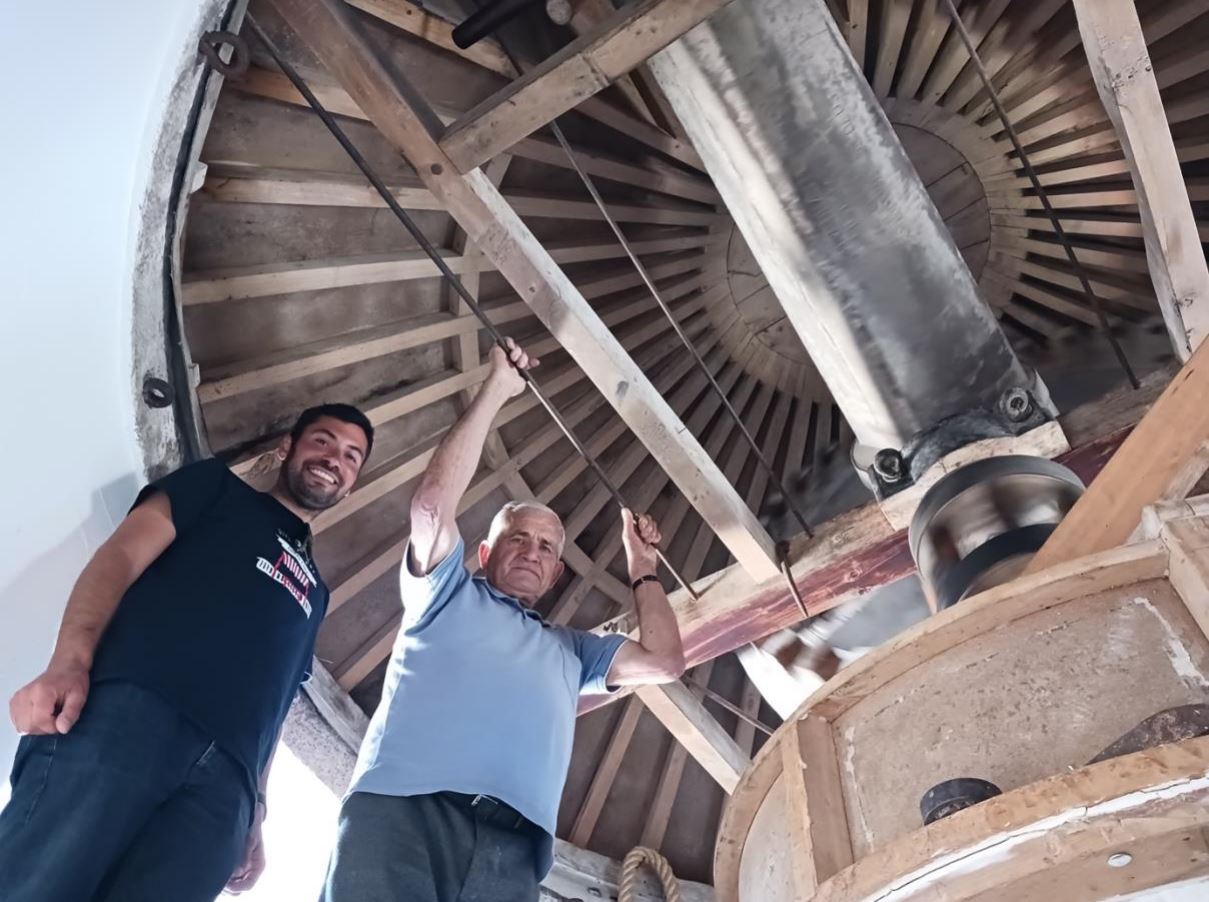
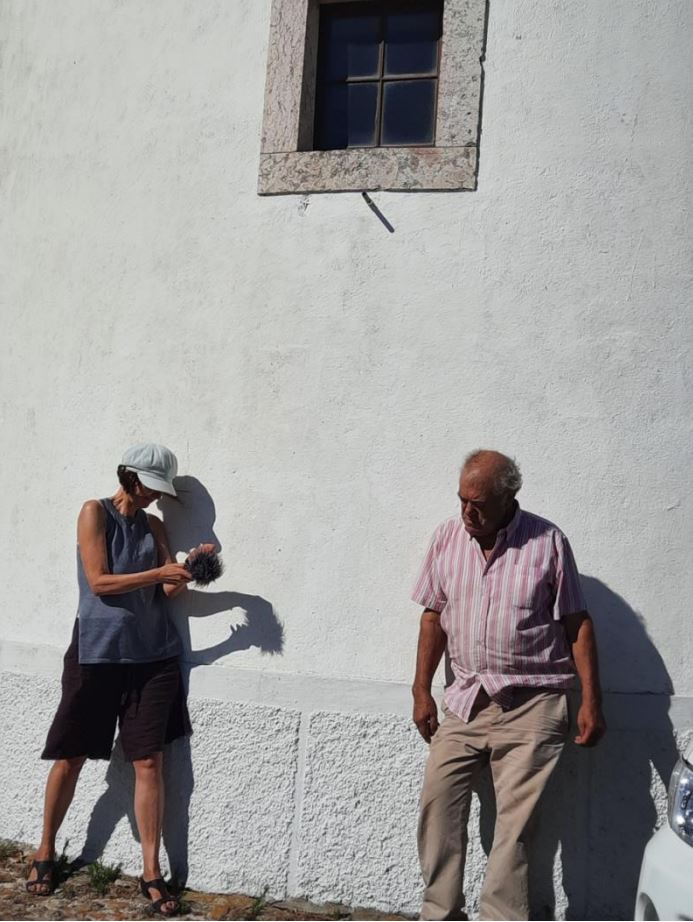
Windmiller Manuel Martinho with Jutta Ravenna listening to the sounds
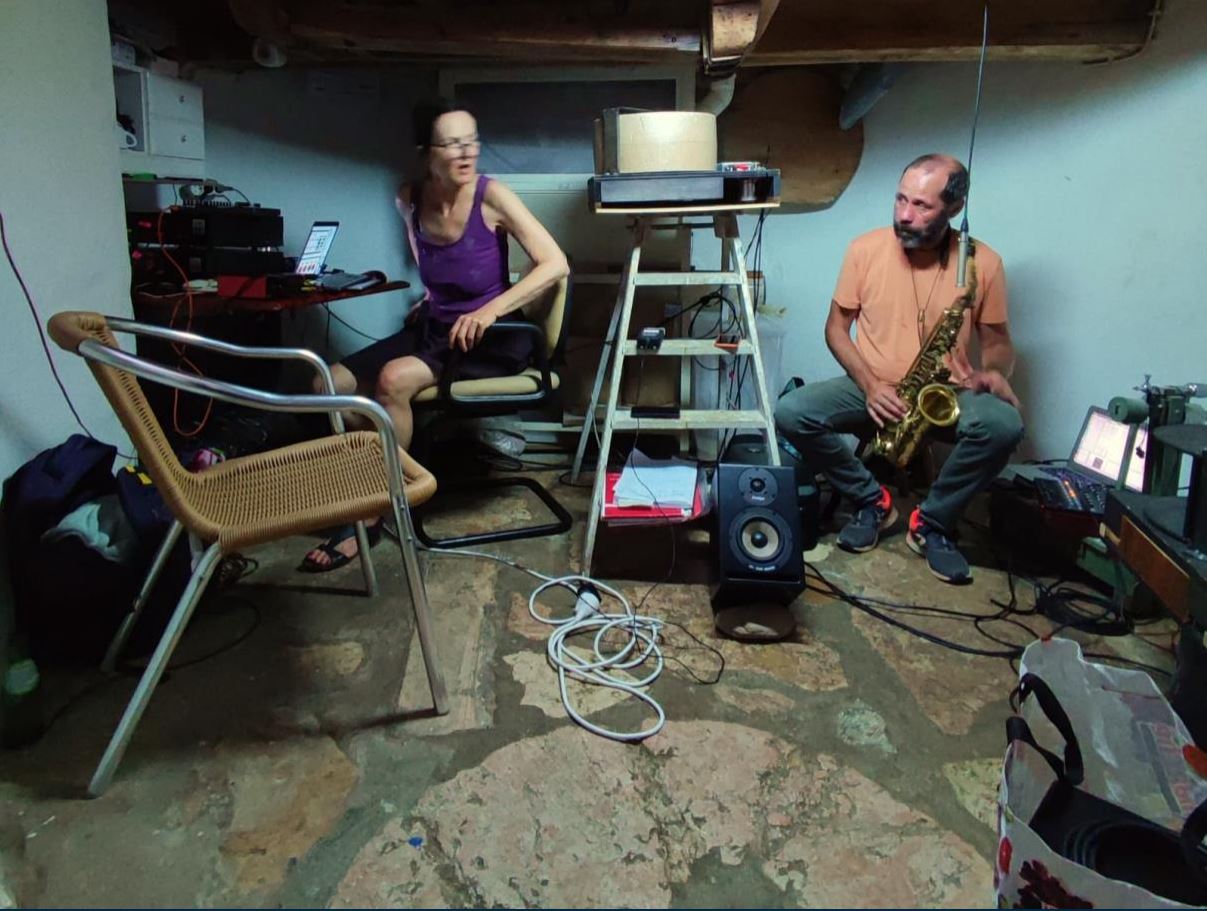
Rehearsal situation with Nuno Torres (saxophone) with Jutta Ravenna (Leslies). The natural frequency of the interior of the mill was slightly detuned to provoke beats and interferences.
Embedded in the landscape, you can not only hear the spatial sound created by the movement of the blades in the wind, but also the fluctuations in the rotational speed of the windmill blades resulting from the variations in wind force: with a harmonious sound character outside and a rhythmic sound character inside.
The centrifugal force can be sensually experienced in the acceleration and deceleration of the rotating loudspeaker and mill wheel.
One can interpret the resonators on the blades as kinetic sound objects.
Workshop
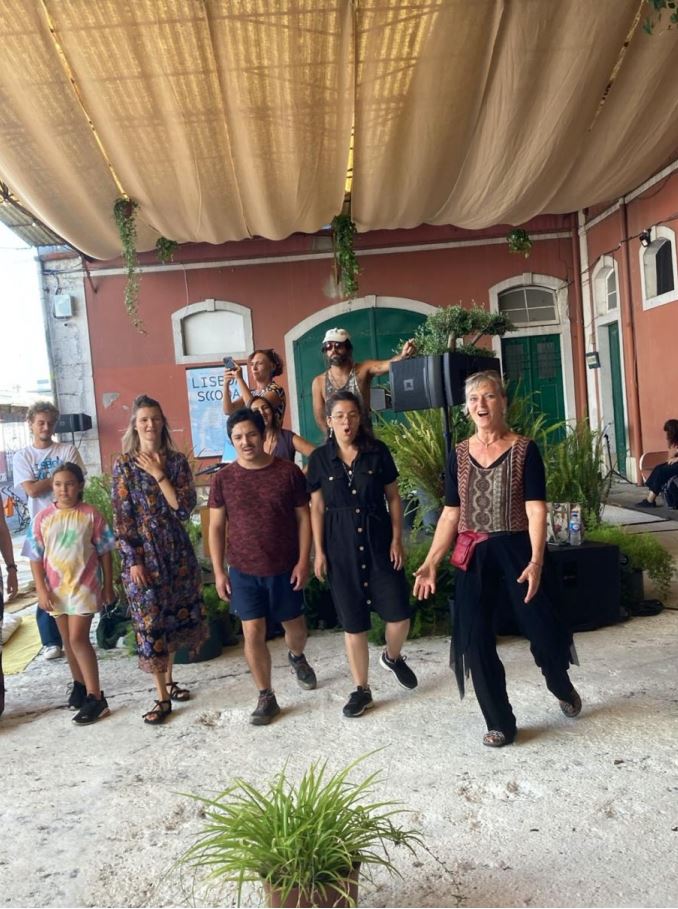
As part of the Lisboa Soa 2023 festival, Helga Kroeplin conducted the workshop "Circulating Voices".
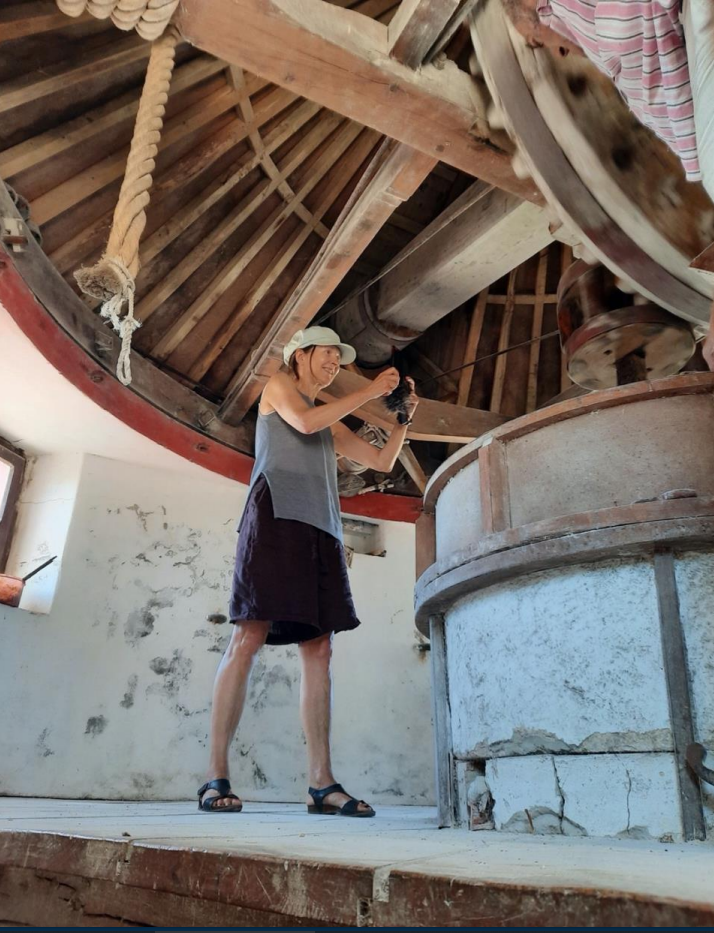
The windmiller hoisting the sails to make the mill sound using wind energy
Outlook
In dialogue with the Goethe-Institut Lisbon (Ms. Julia Klein), initial plans were made for a possible cooperation in 2025 on the topic of the Circulating Sounds of the musical sustainability project, which focuses on the sounding windmills of Portugal and their unique acoustic appearance. The Lisboa Soa Festival 2025 has been secured as a partner.
The occasion would be the annual windmill festival (Dia National dos Moinhos). It mobilizes the knowledge of the ancestors as pioneers of sustainability, as the historic mills operate without any electricity on the basis of renewable wind energy and solar panels on the roof of the mill. The concept of the Portuguese mill festival is simple: every year on April 7, the "Dia National dos Moinhos", as many mills as possible are made freely accessible to the public throughout the country, framed by a program of cultural events such as concerts, hands-on activities, guided tours and culinary offerings. The National Mills Day, which was launched in 2007, is intended to have a lasting and increased impact on the preservation of sustainable forms of energy and Portuguese mills as a cultural heritage.
Helga Kroeplin would offer a two-hour open workshop (Circle Singing ). > Singing as a pool for creativity, courage and social integration. > Circle Singing - against isolation, for creativity and courage > Circle Singing - how does it work? and why? > The magic of circling sounds The garden of the Goethe Institute and the Campo dos Martires da Patria or em Jardim do Torel as an opening to the city would be suitable for an audio walk with the windmill sounds based on QR codes.
Audio Walk
Audio walk with windmill sounds from different mill locations with QR codes on approx. 20 weatherproof signs (12 x 15 cm) (Attachment to trees in the park using cable ties without damaging the plants)
Artist Talk
Helga Kroeplin/Jutta Ravenna/ Eunice Artur/ Nuno Torres/ Julia Klein , (requested) under the moderation of Raquel Castro (curator of the Lisboa Soa sound art festival)
Live performance in the Moinho de Apelacao in duo with the artist Nuno Torres (saxophone) and Jutta Ravenna (Leslie loudspeaker)