Mill Sounds of Portugal
An Acoustic Journey
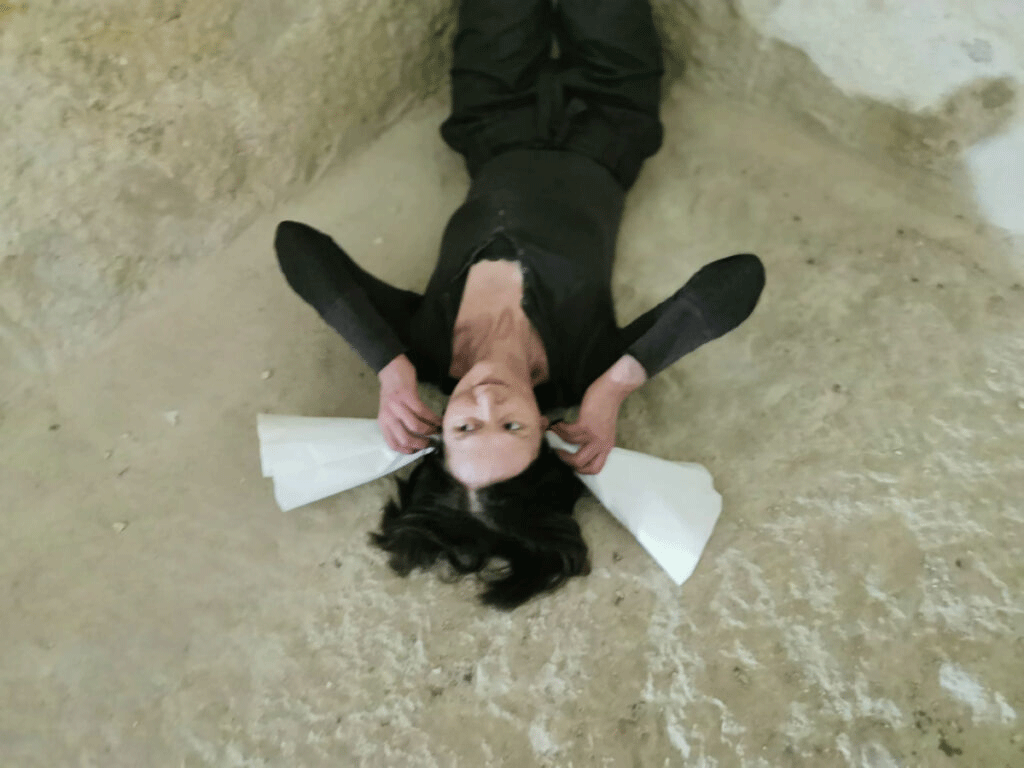
Jutta Ravenna studied fine arts and music in Düsseldorf and Berlin. She works as a sound artist with kinetic objects. In mobile loudspeaker scenarios of rotating, swinging or falling objects, she makes the significance of physical space for music tangible and comprehensible. The artist usually designs her installations in relation to a specific situation on site. Since 1994, she has worked in places such as lakes, disused shipyards, a gelatine factory, old churches and monasteries, radio buildings and universities. Jutta Ravenna is represented with numerous exhibitions at home and abroad and at festivals, including: São Paulo Film Festival, Goethe Centre Santa Cruz, Bolivia, Klangturm St. Pölten, DARB Center 1718, Cairo, Egypt, Sound Art Gallery SA)) Moscow, Lisboa Soa Festival Lisbon, Festival for Music and Light Berlin, singuhr hoergalerie Berlin, Villa Contarini Padua, Deutsche Telecom Berlin, Akademie der Künste Berlin. Ravenna was co-initiator of the series "Klangkunst im Dialog" (1996) and curator of the festival "Sonifications" 2017 of the Berliner Gesellschaft für Neue Musik). Since 2022 sound art project Circulating Sounds with Portuguese windmills in collaboration with the Lusófona University Lisbon.
https://jutta-ravenna.com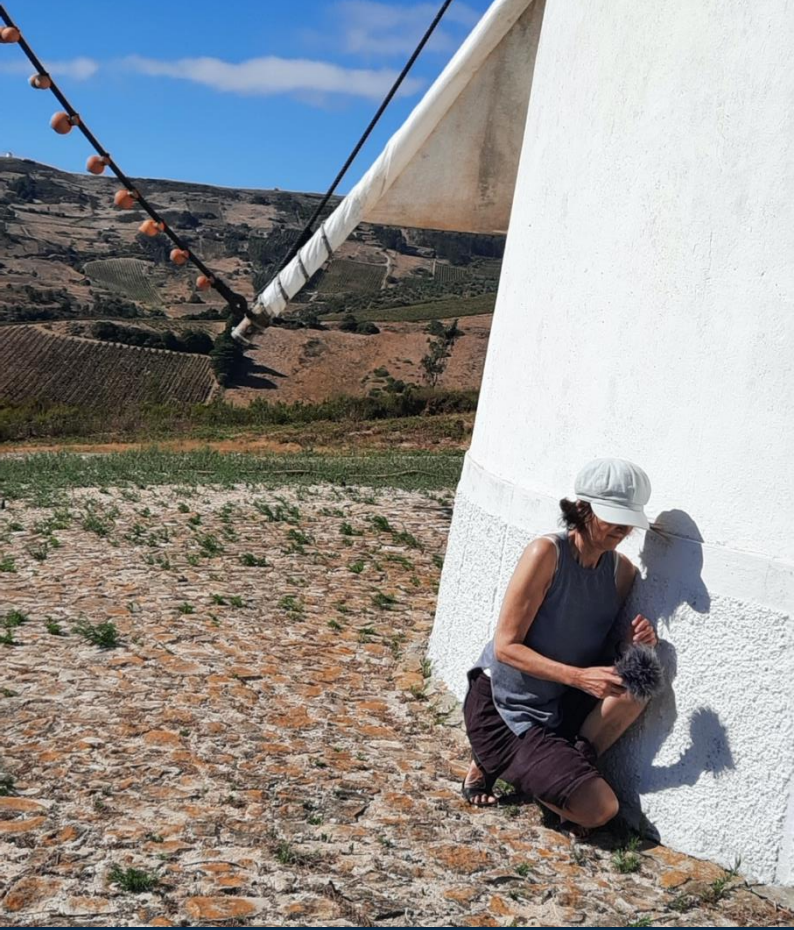
A sound art project in cooperation with the National Mill Day of Portugal and the Lusófona University
The use of wind energy as natural, sustainable technology has a long tradition in Portugal. About 3000 windmills were still in operation and played an important role in the agriculturally oriented economy of the country in the mid-1960s. Structural changes within the economy, dominance of new round-the-clock productivity oriented technologies and urbanisation trends of the post-WWII society have ever since contributed to a further declination both in terms of number as well as state of the remaining windmills. However, a new level of awareness regarding their cultural importance and the necessity for preservation emerged from this loss.
Windmills have in the meantime been declared cultural heritage, and as such are not only put under protection but also, in order to escape the fate of becoming a pure monument of the past times, their presence and visibility call for new, responsible yet challenging concepts and a constant rethinking of relationships between the past and present. Only by reflecting upon this from different perspectives, a necessary amount of ideas and diverse approaches can collect over time and generate further cultural values.
In addition to their functional purpose, rotating windmill blades produce sound. Their audible aesthetic peculiarity consists first of all of the spatial sound resulting from the interaction of the pure wind with the surface of the blades in the landscape. In addition, numerous Portuguese windmills in the southwestern coastal strip are equipped with approximately 50 resonating bodies, tuned in different
frequencies, which are mounted on the windmill blades of each such windmill. There are different types of sound vessels: "buzinas "(buzzers), "canudas" (double flutes) and "jarras" (vases), made of clay jars, conch shells, reeds, cane, or tin cans.
The Sound Art project Circulating Sounds focuses on the sonic aspects of these mills in order to research and document changing, rotating sounds in the landscape and urban context.
It will fosten to contact owners of windmills interested in a dialogue of art and culture on the topic of soundscapes with the aim of raising awareness for sound phenomena in the nature and society as well as sound art as a multidimensional spacial and temporal art form.
The sound map is part of the project Circulating Sounds. As an attempt of audible memorial it is like an archive a data base for the public. Furthermore, it will provide a valuable foundation for further artistic and scientific research, production of cultural content (e.g. for strengthening rural areas).
Technically, a sound map is a digital interface that embeds a variety of audio recordings into a kind of audible geographical structure. This is how the sound map works: as soon as the user clicks on a symbol on the interactive map of Portugal, she or he immediately will hear the corresponding location-specific sound of a windmill.
The Lusófona University will open together with the sound artist Jutta Ravenna (Berlin), the initiator of the project, a dialogue of art and culture between Portuguese artists, local festivals, cultural organisations, and owners of windmills interested in on the topic of soundscapes with the aim of raising awareness for sound phenomena in the nature and society as well as sound art as a multidimensional spacial and temporal art form.
Every year on April 7 most of the sounding windmills open their doors on the occasion of the Portuguese mill festival, the "Dia National dos Moinhos", as many mills as possible are made freely accessible to the public throughout the country.
https://jutta-ravenna.comThe use of wind energy as natural, sustainable technology has a long tradition in Portugal. About 3000 windmills were still in operation and played an important role in the agriculturally oriented economy of the country in the mid-1960s. Structural changes within the economy, dominance of new round-the-clock productivity oriented technologies and urbanisation trends of the post-WWII society have ever since contributed to a further declination both in terms of number as well as state of the remaining windmills. However, a new level of awareness regarding their cultural importance and the necessity for preservation emerged from this loss.
Windmills have in the meantime been declared cultural heritage, and as such are not only put under protection but also, in order to escape the fate of becoming a pure monument of the past times, their presence and visibility call for new, responsible yet challenging concepts and a constant rethinking of relationships between the past and present. Only by reflecting upon this from different perspectives, a necessary amount of ideas and diverse approaches can collect over time and generate further cultural values.
In addition to their functional purpose, rotating windmill blades produce sound. Their audible aesthetic peculiarity consists first of all of the spatial sound resulting from the interaction of the pure wind with the surface of the blades in the landscape. In addition, numerous Portuguese windmills in the southwestern coastal strip are equipped with approximately 50 resonating bodies, tuned in different
frequencies, which are mounted on the windmill blades of each such windmill. There are different types of sound vessels: "buzinas "(buzzers), "canudas" (double flutes) and "jarras" (vases), made of clay jars, conch shells, reeds, cane, or tin cans.
The Sound Art project Circulating Sounds focuses on the sonic aspects of these mills in order to research and document changing, rotating sounds in the landscape and urban context.
It will fosten to contact owners of windmills interested in a dialogue of art and culture on the topic of soundscapes with the aim of raising awareness for sound phenomena in the nature and society as well as sound art as a multidimensional spacial and temporal art form.
The sound map is part of the project Circulating Sounds. As an attempt of audible memorial it is like an archive a data base for the public. Furthermore, it will provide a valuable foundation for further artistic and scientific research, production of cultural content (e.g. for strengthening rural areas).
Technically, a sound map is a digital interface that embeds a variety of audio recordings into a kind of audible geographical structure. This is how the sound map works: as soon as the user clicks on a symbol on the interactive map of Portugal, she or he immediately will hear the corresponding location-specific sound of a windmill.
The Lusófona University will open together with the sound artist Jutta Ravenna (Berlin), the initiator of the project, a dialogue of art and culture between Portuguese artists, local festivals, cultural organisations, and owners of windmills interested in on the topic of soundscapes with the aim of raising awareness for sound phenomena in the nature and society as well as sound art as a multidimensional spacial and temporal art form.
Every year on April 7 most of the sounding windmills open their doors on the occasion of the Portuguese mill festival, the "Dia National dos Moinhos", as many mills as possible are made freely accessible to the public throughout the country.